Occam raises £2.6m pre-seed to field software-only, GPS‑free drone autonomy in Ukraine

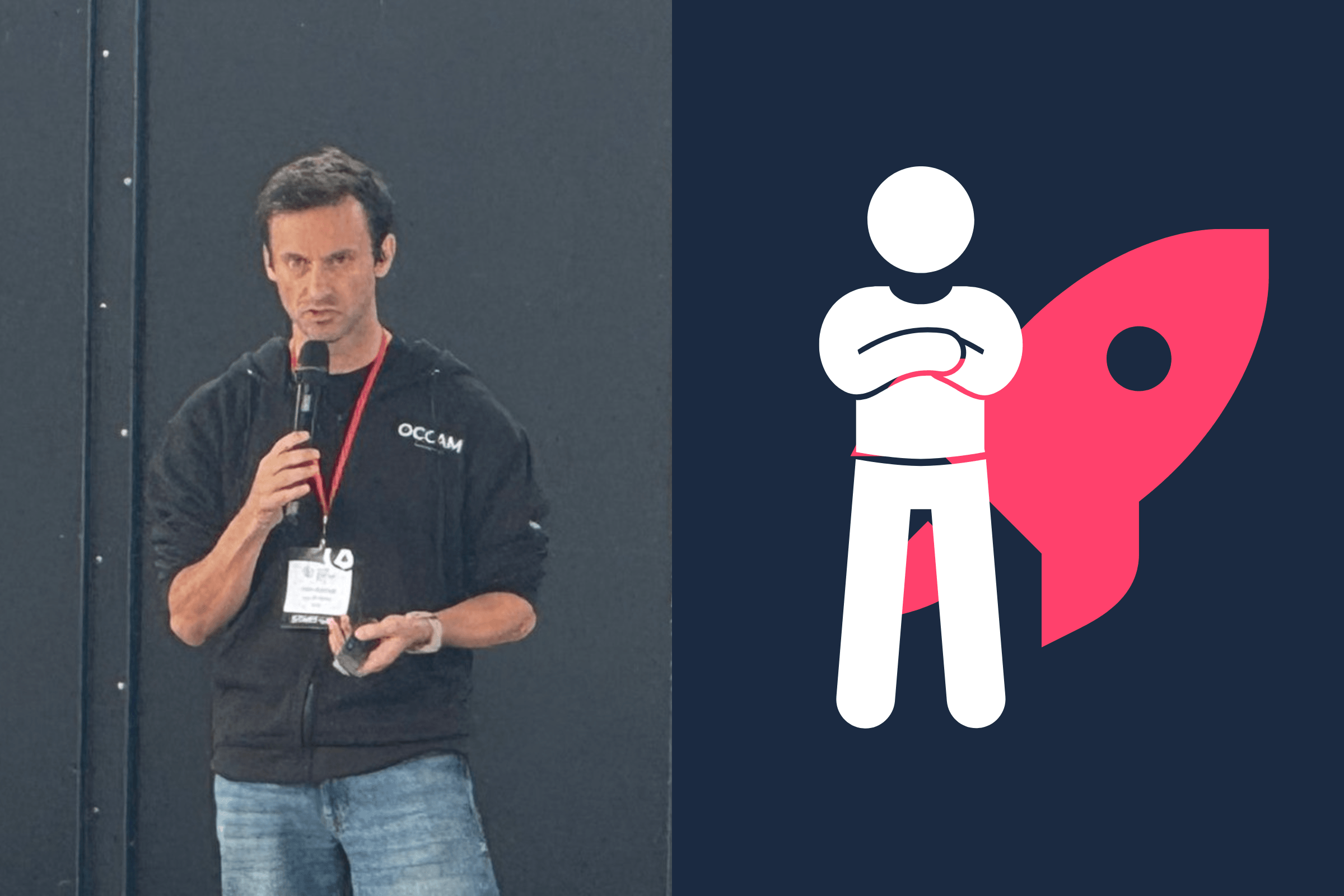
This article covers Occam, a drones startup focused on autonomous drone operations, which has raised £2.6m in a pre-seed funding round led by Presto Tech Horizons with participation from Antler, Freedom Fund and TYR.vc. The funding will be used to accelerate Ukrainian adoption of its software-only autonomy stack and to develop additional support capabilities for unmanned platforms, targeting militaries and manufacturers seeking resilience to GPS denial and signal jamming.
Occam Industries, a drones startup focused on autonomous drone operations, has raised £2.6m in a pre-seed funding round led by Presto Tech Horizons, with participation from Antler, Freedom Fund and TYR.vc. The capital will be used to push Ukrainian adoption of its software-only autonomy stack and to develop additional support capabilities for unmanned platforms — a timely move as demand for resilient, jamming‑resistant autonomy rises in contested environments.
Why it matters
The deal underscores a practical problem facing modern militaries and manufacturers: low-cost drones are plentiful, but most still require continuous human control, creating an operational bottleneck. Occam’s software aims to let platforms operate independently of outside communication and GPS, which would reduce vulnerability to interference and jamming.
That capability is particularly relevant in Ukraine, where use of drones has surged. The company points to an increase from about 11,000 recorded drone attacks in 2024 to roughly 54,700 in 2025, and to drones comprising roughly 96% of aerial weapons deployed in recent phases of the conflict. Those figures explain why autonomy that can withstand latency, degraded links and complex weather has near-term operational relevance.
Inside the product
Occam offers a software-only autonomy layer that can be integrated on existing unmanned platforms to remove the need for a continuous human pilot. The stack is designed to operate without GPS or external connectivity, which, in theory, makes it more resilient to signal denial.
The company has moved beyond laboratory pilots. After assessments via Ukraine’s national defence cluster Brave1 and field tests on the TEST in Ukraine platform in late January, Occam plans a proof of concept on a Ukrainian unmanned platform adapted for combat and adverse weather conditions. The next commercial step is paid adoption projects with European defence primes, with deployments expected this year.
Who are the investors?
Occam’s £2.6m pre-seed round was led by Presto Tech Horizons. Other participants named in the round are Antler, Freedom Fund and TYR.vc. The funds will be used to accelerate adoption across the front line in Ukraine and to expand autonomous support capabilities for unmanned systems, while moving from evaluation to operational deployment.
In the announcement, Matej Luhovy, Partner at Presto Tech Horizons, said:
Occam impressed us with their ability to turn ambition into operational reality at an incredible pace. They deploy, learn, and iterate under conditions dictated by the front line. Gui has an exceptional ability to rally people around a clear mission, and the team executes on it with urgency and discipline. Combined with a software-only autonomy stack that works without GPS or external connectivity, this is a solution that is not just novel, but fundamentally different.
In the announcement, Hannah Leach, Partner at Antler, said:
We often say that founders and teams need to learn quickly, adapt under pressure, thrive in ambiguity, and stay focused on outcomes – but we aren’t usually imagining environments this extreme. Occam is a team honed to excel under exceedingly challenging conditions, and to respond daily to real-world constraints.
If you're researching potential backers in this space:
- Explore our list of drones venture capital firms in the UK
- Browse our directory of drones angel investors in the UK
Founder perspective
In the announcement, Gui Wainwright, Co-founder & CEO at Occam, said:
Ukraine is not a pilot or test market. It’s the most demanding operating environment for autonomous systems anywhere in the world right now. Every assumption is tested under pressure: latency, reliability, operator load, decision-making. What we build at Occam is shaped by that reality and then honed in combat conditions. Fundamentally, if a system cannot perform at the zero-line, we cannot trust troops or security to it, and it has no place in modern defence.
Wainwright frames Ukraine as both a proving ground and a source of hard requirements that shape product development. That focus on operating realities — not simulated environments — is central to Occam’s strategy for pushing from tests to paid deployments.
The bigger picture
Brave1’s involvement signals growing appetite in Ukraine for international systems that can be adapted locally. In the announcement, Andrii Hrytseniuk, CEO at Brave1, said:
The future of defense technologies is being shaped and tested in Ukraine today. Brave1 has created a platform where international partners can trial their solutions, exchange expertise, and work with us to address emerging security challenges. AI is one of our key priorities, as it is fundamentally transforming the nature of combat operations. We highly value the fact that British technology companies like Occam are working directly with Ukraine to respond to real frontline needs – an experience that strengthens not only Ukraine, but Europe as a whole.
Occam’s approach — software-first autonomy that can be retrofitted onto existing platforms — fits broader defence procurement trends that favour modular, rapidly upgradable systems. The start of paid projects with European primes will be an early test of whether the offering can scale beyond Ukraine’s unique operational demands.
This funding round also reflects continued investor interest in defence-oriented automation and AI-driven systems coming out of the UK. As Occam moves from field tests to operational deployments, its progress will be watched by militaries and contractors seeking autonomy that can operate under contested communications and GPS denial, both in Ukraine and across Europe.
They've invested in Occam
Get to know these drones investors

Click here for a full list of 7,526+ startup investors in the UK