£2.5m seed backs OutSee to validate Nomaly AI genomics targets in lab

This article covers OutSee, a Cambridge biotech startup, which has closed a £2.5m seed funding round led by Ahren Innovation Capital and signed a strategic collaboration with preclinical CRO o2h discovery to progress its lead drug target. The development aims to advance computationally identified therapeutic targets towards experimental proof of concept, supporting OutSee's in‑house discovery work and building a library of drug candidates via o2h's co-discovery and match-funding model.
OutSee, a Cambridge biotech startup, has closed a £2.5M seed funding round led by Ahren Innovation Capital and signed a strategic collaboration with preclinical CRO o2h discovery to progress its lead drug target. The deal completes an oversubscribed fundraising first announced in June 2025 and pairs OutSee’s AI-led Nomaly platform with o2h’s co-discovery and match-funding model to accelerate experimental validation.
Why it matters
The funding and partnership aim to move computational target predictions towards experimental proof of concept. OutSee says the money will expand its in-house discovery work and advance a portfolio of data-backed therapeutic targets, while the o2h collaboration is intended to build a library of drug candidates for OutSee’s lead target. For biotech companies, combining early computational discovery with CRO partnerships is a common route to de-risk assets before larger therapeutic development rounds.
Inside the product
OutSee’s Nomaly platform uses a genomics-first approach. The company describes Nomaly as an AI-driven, hypothesis-free predictive engine that models molecular and cellular biology to predict disease and phenotype from individual genomes. That approach is pitched as complementary to conventional target discovery pipelines and, according to OutSee, can reveal mechanisms in small datasets or in data already analysed by other methods.
The announced project with o2h will apply Nomaly’s outputs to generate and test candidate molecules, moving a predicted target through experimental validation and into an internal pipeline of assets. The collaboration leverages o2h’s integrated drug discovery capabilities and OutSee’s computational biology expertise.
Who are the investors?
The seed funding round closed at £2.5M and was led by Ahren Innovation Capital. Other participants included Kadmos Capital, Panacea, Empirical Ventures and 26 independent angel investors. The company completed a first close in June 2025 and expanded the round to an oversubscribed final close.
Support for the partnership and early-stage experimental work comes via o2h’s co-discovery InflexionTx, a match-funding model covering HIT ID Phase proof of concept studies. That structure aims to unlock and de-risk novel ideas by pairing industry funding with CRO-led preclinical development.
In the announcement, Prashant Shah, Co-founder, o2h Group, said:
o2h discovery prioritises insight-driven science and OutSee’s pioneering approach to target identification facilitates just that, holding the potential to unlock a new wave of therapeutic targets. The technology is disruptive and enables datasets to be analysed in a completely new way, even those that have already been combed using traditional methods. We look forward to working together and leveraging our respective expertise to drive this programme forward.
If you're researching potential backers in this space:
- Explore our list of biotech venture capital firms in the UK
- Browse our directory of biotech angel investors in the UK
Founder perspective
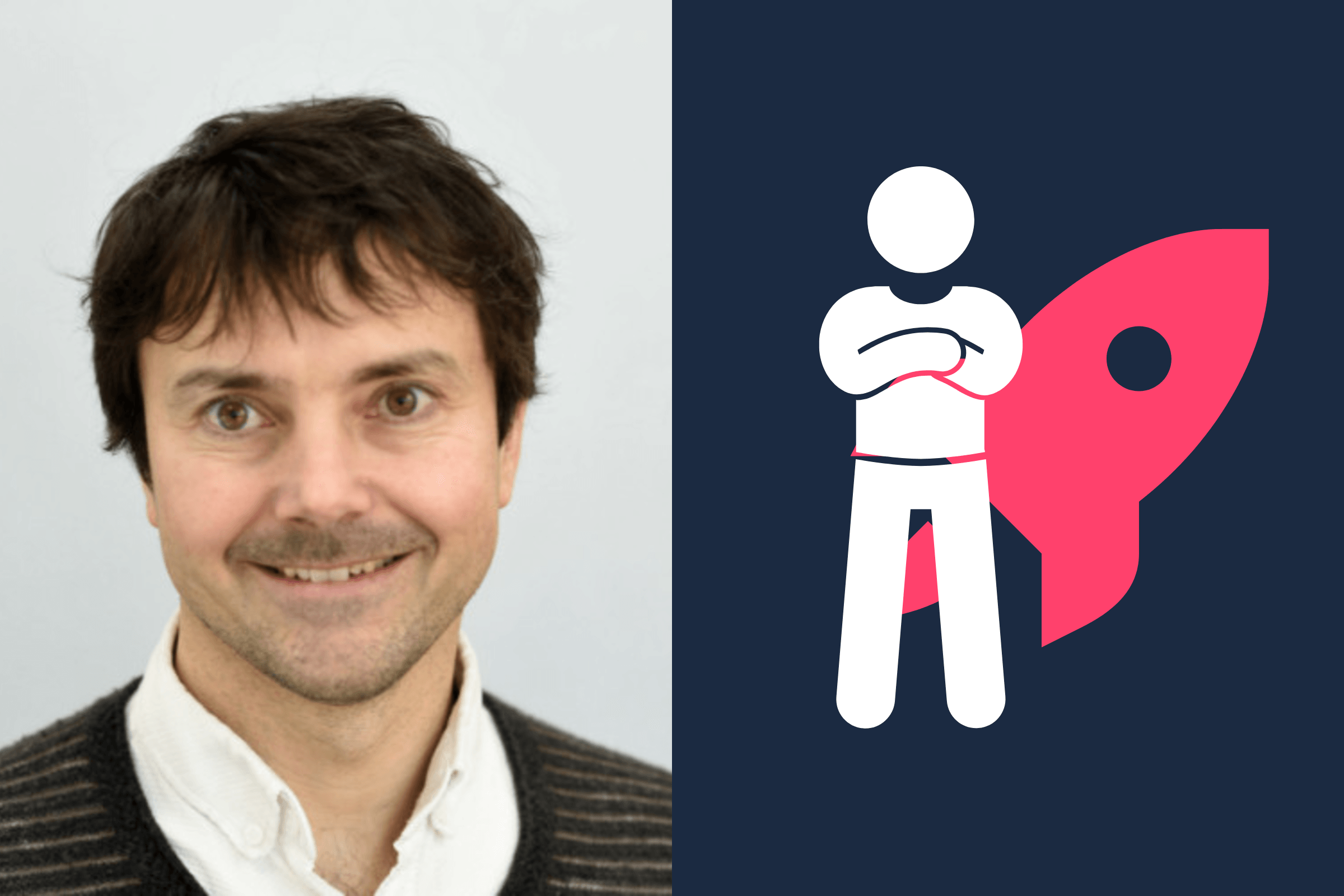
In the announcement, Dr Julian Gough, CEO and Founder, OutSee, said:
Partnering with the team at o2h discovery is a fantastic milestone for OutSee as we look ahead to commencing our first drug discovery programme and showcasing the potential of our Nomaly platform to revolutionise target discovery. The agreement is testament to the strength of our technology and, in combination with the closure of our oversubscribed seed funding round, kicks off a very exciting year. Thank you to our investors and supporters for their continued support, and the hard work and dedication of our team.
Gough frames the deal as both validation of the platform and a practical step towards building an experimental pipeline that could support future therapeutic development.
The bigger picture
The OutSee raise and o2h tie-up illustrate two trends in the UK biotech ecosystem: early-stage raises remain a key way to fund computational discovery, and collaborations with CROs and match-funding models are being used to translate algorithmic predictions into testable assets. For investors, these arrangements can shorten the path to value creation by combining in silico target nomination with laboratory validation.
Cambridge remains a strong hub for genomic and drug discovery activity, and this transaction reflects continuing interest from biotech investors in approaches that blend AI with experimental pipelines across the UK and Europe.
They've invested in OutSee
Get to know these biotech investors



Click here for a full list of 7,526+ startup investors in the UK