Top 11 Advanced Materials Startups UK
Find the fastest growing UK advanced materials companies.
Top 11 Advanced Materials Startups UK (Free List)
Find the fastest growing advanced materials companies in the UK.


1 Explore 11 UK advanced materials startups and their founders, who have collectively raised £195.62M.
2 Easily sort, filter, and compare the UK's top startups — customise the list to your needs.
3 Discover top startups for investment, B2B sales, partnerships, hiring, and industry connections.






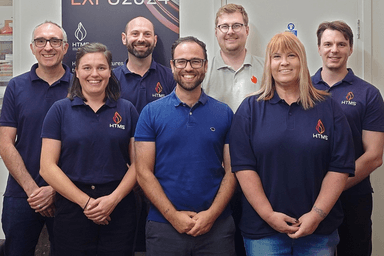





You can connect with fast-growing advanced materials startups with the full list of recently funded startups from the UK.
Advanced materials startups are reshaping how products are designed, manufactured and scaled across energy, aerospace, electronics, construction and healthcare. The UK has become a strong base for founders developing next-generation materials with measurable performance and sustainability gains.
UK advanced materials startup insights
The UK advanced materials ecosystem combines university-led research, industrial partnerships and increasing investor appetite for science-led businesses. Activity is concentrated in London, Cambridge, Oxford, the Midlands, Manchester and Sheffield, where engineering and manufacturing talent is deep.
Advanced materials in this context includes novel composites, nanomaterials, functional coatings, battery materials, semiconductors, biomaterials and performance polymers. These startups often solve mission-critical problems in durability, efficiency, weight, conductivity, thermal performance and recyclability.
Snapshot of the UK advanced materials landscape
- Strong pipeline of spinouts and technical founders from materials science and engineering programmes
- Applications span climate tech, mobility, aerospace, electronics, medtech and industrial manufacturing
- Funding includes grants, angel syndicates, specialist deeptech funds and strategic corporate capital
- Commercial traction often driven by pilots, qualification cycles and long-term supply partnerships
- Growing demand for sustainable materials and lower-carbon manufacturing processes
Use this page to discover funded advanced materials startups in the UK, then explore their investors, technologies and recent funding activity.
That is our snapshot of advanced materials innovation in the UK. If you are building in this category, choosing investors with experience in industrial scaling and technical due diligence can materially improve your growth path.
What are Advanced Materials?
Advanced materials are engineered substances designed to deliver superior performance versus traditional materials. They are developed with specific functional properties such as lower weight, higher strength, better conductivity, improved thermal resistance or greater sustainability.
5 exciting advanced materials categories
Key areas of advanced materials innovation include:
1 - Energy Storage Materials
Battery chemistries and supporting materials that improve energy density, charging speed and cycle life.
2 - Lightweight Composites
High-strength, low-weight materials used in mobility, aerospace and high-performance manufacturing.
3 - Functional Coatings and Surfaces
Smart coatings that improve durability, corrosion resistance, conductivity or antimicrobial performance.
4 - Semiconductor and Electronic Materials
Materials enabling better chip performance, sensing and power electronics efficiency.
5 - Sustainable and Circular Materials
Bio-based, recyclable and lower-emission materials designed for long-term environmental impact reduction.
With strong scientific foundations and industrial demand, the UK remains well positioned to produce globally relevant advanced materials companies.