WaiV Robotics secures £5.53m seed to recover VTOLs with gyro-stabilised landing pad

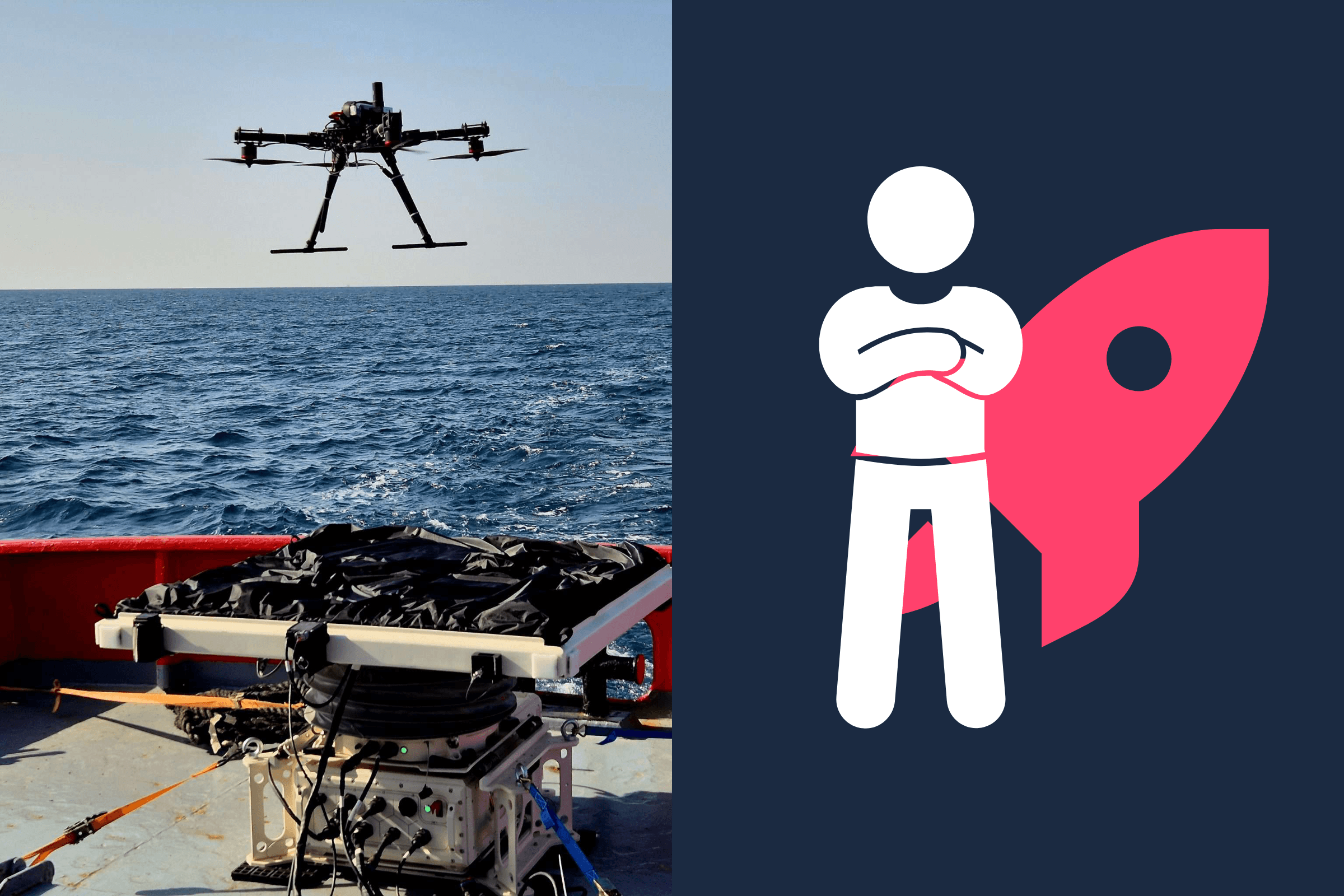
This article covers WaiV Robotics, a London tech startup, which has raised £5.53m in a growth funding round to launch a gyro-stabilised landing and takeoff platform that recovers VTOL drones on moving vessels as small as 10 metres. The platform aims to automate launch and recovery in high sea states without aircraft modifications, supporting maritime drone operations for offshore inspection, windfarm maintenance, search and rescue, fisheries monitoring and certain defence uses.
WaiV Robotics, a London tech startup, has raised £5.53m (about US$7.5m) in a growth funding round to launch a gyro-stabilised landing and takeoff platform that recovers VTOL drones on moving vessels as small as 10 metres. The system aims to remove a long-standing operational constraint for maritime drone use by automating recovery in high sea states without modifications to the aircraft.
Why it matters
Recovering VTOL drones at sea has been one of unmanned aviation’s toughest problems. Vessel decks move through six degrees of freedom under stochastic wave patterns and are prone to salt spray and slipperiness, which has historically limited drone deployment to calm conditions or larger ships with specialist crews. By enabling reliable launch and recovery from small vessels, WaiV’s platform could broaden drone use for offshore inspection, windfarm operations, search and rescue, fisheries monitoring, and certain defence applications.
The announcement also highlights investor appetite for infrastructure that supports maritime autonomy rather than just aircraft development, a trend likely to attract attention as the UK expands offshore wind and maritime technology programmes.
Inside the product
WaiV’s system combines a gyro-stabilised landing pad with a patent-pending catch-lock-release mechanism and AI-driven predictive algorithms. The platform steers the incoming drone via the remote control, effectively taking over manual piloting during the critical landing phase, and absorbs touchdown impact. A mechanical lock secures the drone’s skids to prevent bounce, slide, or roll-off when the vessel is pitching and rolling.
Key product details:
- Compatible with multicopter, fixed-wing and helicopter VTOL UAVs from any manufacturer, without hardware or software changes to the aircraft.
- Current payload limit: up to 15 kilograms.
- Roadmap: scale down to aircraft around 3 kilograms and scale up to carrier classes in the 100–300 kilogram range.
- Designed to operate from decks on vessels as small as 10 metres and handle real-world sea states rather than laboratory conditions.
Independent coverage previously noted that automated landings on moving vessels remain an unsolved challenge in many operational contexts, underscoring the practical problem WaiV is addressing.
Who are the investors?
WaiV announced the fundraising as approximately £5.5m (reported here as £5.53m / US$7.5m). The company has not disclosed the lead investor or the full list of participants in the round. The firm described the raise as seed in its launch materials, but under reporting standards used here the amount places the round in the growth funding category.
Although investors were not named, the deal fits a growing pattern of interest from tech investors in maritime autonomy and infrastructure plays that enable wider drone deployment.
If you're researching potential backers in this space:
- Explore our list of robotics venture capital firms in the UK
- Browse our directory of robotics angel investors in the UK
Founder perspective
In the announcement, Johnny Carni, Founder and CEO at WaiV Robotics, said:
For drones to become a reliable part of offshore operations, the missing piece isn’t the aircraft, it’s the infrastructure around it. Our system was designed to remove traditional deployment constraints, allowing fleets to operate as mobile launch and recovery hubs that ensure reliable UAV operations. Without a dependable way to launch and recover at sea, large-scale deployment simply doesn’t work. Our goal is to remove that constraint and make drone operations viable from virtually any vessel.
Carni’s comments underline the company’s focus on operational infrastructure rather than incremental aircraft performance improvements.
The bigger picture
WaiV’s platform sits at the intersection of robotics, AI and maritime engineering. If it performs as described in operational trials, it could shift how smaller operators and offshore projects use unmanned aircraft, reducing the need for specialist crews and larger vessels. For the UK and European maritime sectors—where offshore wind expansion and coastal monitoring are priorities—the technology could lower costs and broaden the pool of vessels able to host drone operations.
The lack of disclosed investors leaves open questions about commercial partners and pilot programmes. Observers will be watching for trial results, customer contracts in offshore wind or defence, and regulatory responses as maritime drone operations scale.
Click here for a full list of 7,589+ startup investors in the UK