Helical secures £7.4m to turn foundation models into decision-ready in-silico discovery workflows

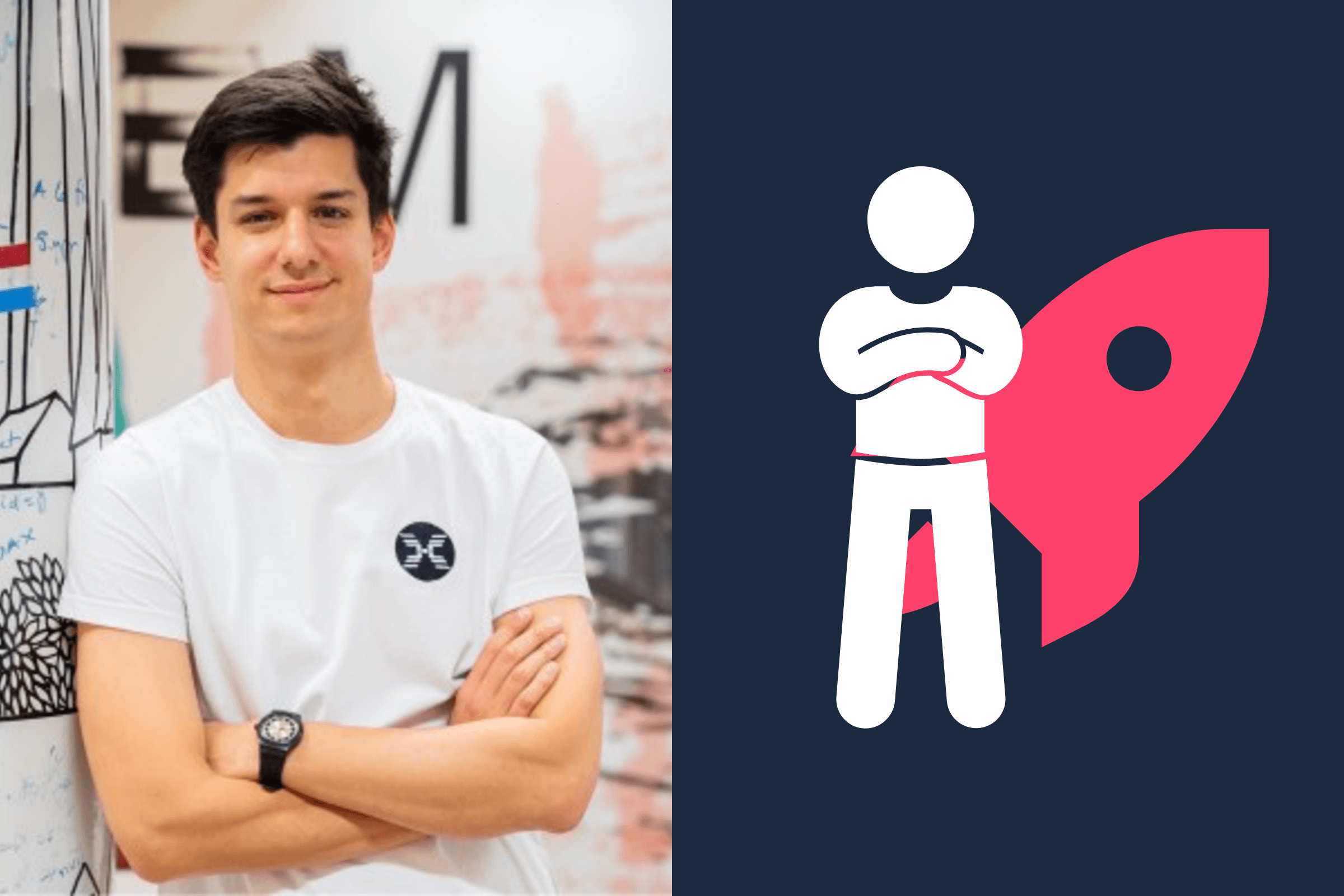
This article covers Helical, a London biotech startup, which has raised £7.4m ($10m) in a growth funding round to commercialise a virtual AI lab that turns biological foundation models into reproducible, decision-ready in-silico discovery workflows for pharma. It aims to support drugmakers and translational scientists by enabling more of the hypothesis-testing cycle to be run computationally before committing to wet-lab experiments.
Helical, a London biotech startup, has raised £7.4m ($10m) in a growth funding round to commercialise a virtual AI lab that aims to turn biological foundation models into reproducible, decision-ready in-silico discovery workflows for pharma. The financing comes as drugmakers push to increase R&D throughput by running more of the hypothesis-testing cycle computationally before committing to expensive wet-lab experiments.
Why it matters
Drug discovery remains slow and costly: R&D spending tops hundreds of billions annually, average development timelines stretch beyond a decade, and more than 90 percent of candidates entering clinical trials fail. Helical’s proposition addresses a specific operational gap rather than model performance alone — the hand-off between model outputs and defendable scientific decisions. If reproducibility and workflow governance can be standardised, teams could shorten the time from hypothesis to decision and reduce redundant one-off analyses that currently plague many AI pilots.
Inside the product
Helical offers two tightly coupled surfaces: a Virtual Lab aimed at biologists and translational scientists, and a Model Factory for ML engineers and data scientists. Both run on the same data, models and result sets so computational predictions and experimental decision-making live in a single system rather than in disconnected notebooks.
Use cases the company cites include target identification, biomarker discovery and therapeutic design. Helical says deployments have compressed timelines from years to weeks and have expanded organically from single indications into adjacent therapeutic areas. One public collaboration with Pfizer focuses on predictive blood-based safety biomarkers, indicating early engagement from major pharma players rather than purely preclinical pilots.
Who are the investors?
The round was led by redalpine with participation from Gradient, BoxGroup and Frst. Notable angel participants include Aidan Gomez (CEO, Cohere), Clement Delangue (CEO, Hugging Face) and Mario Goetze (professional footballer).
redalpine is an active European VC focused on tech infrastructure and applied AI. BoxGroup and Gradient are early-stage investors with portfolios across AI and biotech-adjacent enterprises. Cohere and Hugging Face are prominent companies in the foundation model ecosystem; the involvement of their leaders signals strategic interest from practitioners of large-scale machine learning.
In the announcement, Daniel Graf, General Partner at redalpine, said:
We are at a unique point in time where biological foundation models and general language reasoning models are converging.
If you're researching potential backers in this space:
- Explore our list of biotech venture capital firms in the UK
- Browse our directory of biotech angel investors in the UK
Founder perspective
Helical was founded in early 2024 by three former school friends: Rick Schneider, Maxime Allard and Mathieu Klop. Schneider previously built technology at Amazon and worked on international scaling at Celonis. Allard led data science teams at IBM and pursued a PhD in reinforcement learning and robotics. Klop is a cardiologist and genomics researcher. The team argues that combining domain biology experience with ML engineering is necessary to move from prototype models to reproducible discovery systems.
In the announcement, Rick Schneider, co-founder of Helical, said:
The models alone don’t discover drugs. The system does
The bigger picture
Helical’s raise sits at the intersection of two trends: rapid advances in bio foundation models and growing industry demand for operational tooling that makes model-driven predictions actionable and auditable. Many AI efforts in pharma remain stuck at pilot stage because outputs are not delivered through reproducible workflows that bench scientists can validate. Infrastructure plays that bridge ML and laboratory practice are increasingly attractive to investors looking for scalable ways to reduce attrition and cost across R&D portfolios.
The deal also reflects continued appetite among biotech investors for startups building applied AI platforms rather than point-model vendors. If Helical can expand deployments across additional top-20 pharma groups and preserve reproducibility at scale, it may become part of a broader shift where in-silico experiments form a regular, auditable step in the drug discovery pipeline.
This funding round highlights ongoing momentum in the UK and European biotech ecosystem for companies developing AI-first R&D infrastructure, and it underscores investor interest in tools that help translate model outputs into verifiable scientific decisions.
They've invested in Helical
Get to know these biotech investors
| Investors | Investment Focus | Startup Investments | Round Size | Connect |
|---|---|---|---|---|
 Redalpine( ) Zurich, Switzerland  | ||||
 Gradient( ) San Francisco, US  | ||||
 BoxGroup( ) NYC, US | ||||
 Frst( ) Frst is a venture capital firm that focuses on investing in early-stage European... Paris, France  | ||||
| All investors | All investor sectors | All funded startups | All funding rounds |
| Angel Investors | Location | Connect | Investment Focus | Startup Investments |
|---|---|---|---|---|
Toronto | ||||
Miami | ||||
Berlin | ||||
| All angel investors | All locations | All investor sectors | All funded startups |

*These angel investors have publicly mentioned their interest in angel investing or are members of angel networks. (Last updated: July 2026)
Click here for a full list of 7,589+ startup investors in the UK