Lua raises £4.3m to build operating system for human–agent workforces

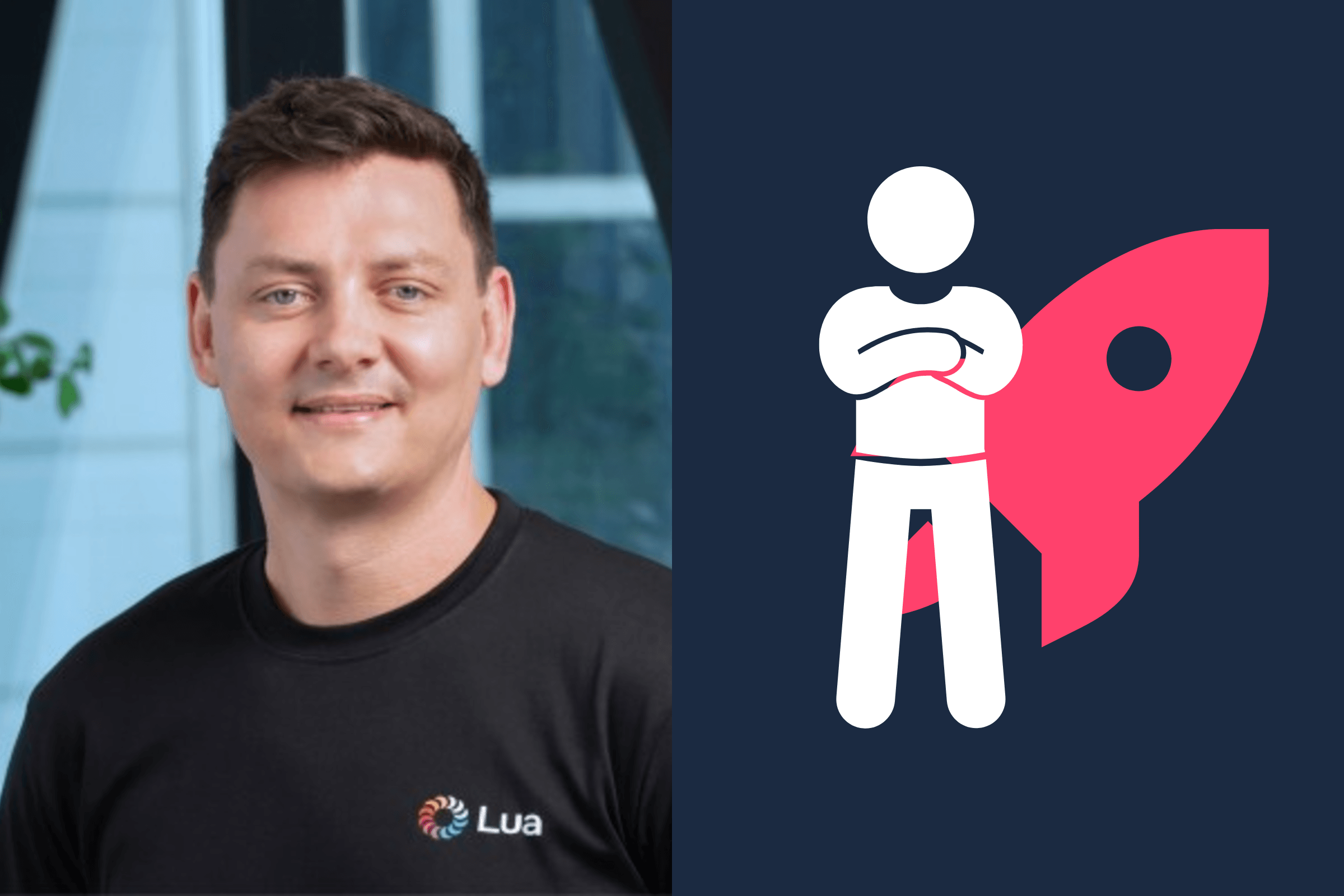
This article covers Lua, an AI startup, which has raised £4.3m ($5.8m) in a growth funding round to develop an operating system for human and agent collaboration in the workplace. The funding aims to help businesses deploy and manage automated agent workforces alongside human staff, supporting both developers and non-technical teams to scale agent-driven automation.
Lua, an AI startup, has raised £4.3m ($5.8m) in a growth funding round to develop an operating system for human and agent collaboration in the workplace — a bet on tools that let teams build, own and manage automated agent workforces alongside human staff.
Why it matters
Organisations are increasingly deploying AI agents to automate customer support, internal workflows and routine decision-making. Lua’s pitch is to make that transition less dependent on specialist engineering teams and third-party black-box platforms. If it works, businesses could move faster to embed agent-driven automation without ceding control over models, data or pricing to external vendors.
The company reports rapid early traction: since launching its agent developer platform in October 2025, Lua says revenue has grown close to 30% week-on-week, and February 2026 saw more agents built on the platform than across the entire prior period.
Inside the product
Lua offers a full-stack agent platform with one-click deployment and interfaces for both technical and non-technical users. Developers can interact via a command-line interface and a visual developer framework; non-technical teams have a visual interface to configure and run agents. The company handles infrastructure, model orchestration, data, channel integrations and monitoring so customers only write business logic and select integrations. Lua also supports coordination between agents and humans, running inside existing systems, and is building a Lua Implementation Network of partners deploying agent workforces in their local markets.
In the announcement, Lorcan O'Cathain, CEO at Lua, said:
The companies that will win over the next few years are the ones that build their agent workforce with the same intentionality they bring to their human workforce. Most businesses are either blocked by technical complexity or locked into rigid tools that don't reflect how their teams actually work. Most agent platforms compound this with black box tooling and per-outcome pricing: the more your agents succeed, the more you pay, with no pathway to improving your agent economics. Lua is built on the opposite principle: teams own their agents, own their outcomes, and build compounding efficiency over time.
Who are the investors?
The round was led by Norrsken22, with participation from Flourish Ventures, Twenty Two Ventures, Phosphor Capital, Y Combinator, 20VC and P1 Ventures, plus angels Henri Stern (CEO, Privy), Kaz Nejatian (CEO, OpenTable) and Med Benmansour (CEO, Nuitee).
Norrsken22 is a tech growth equity fund focused on scaling companies across Africa and is managed by a pan-African team; the fund highlights its network of founders and advisory support as part of its backing rationale. Y Combinator provides early-stage validation and access to a broad founder and investor network. The named angels bring operating experience at consumer and hospitality-focused businesses, which could help Lua adapt agent workflows for customer-facing use cases.
In the announcement, Lexi Novitske, General Partner at Norrsken22, said:
We are thrilled to support Lua. The founders fundamentally understand how agent and human workforces need to collaborate to get work done. Additionally, they are a global company that has deployed in Africa, Asia, the U.S. and Europe with deep experience, a volume of data, and a pricing intuition that's difficult to replicate. We’re excited to help them build out this operating system for human and agent workforces.
If you're researching potential backers in this space:
- Explore our list of AI venture capital firms in the UK
- Browse our directory of AI angel investors in the UK
Founder perspective
Lua was founded by Lorcan O'Cathain and Stefan Kruger, who met while scaling a fintech business in East Africa — Lorcan as chief operating officer and Stefan as chief technology officer. Before Lua, Lorcan was managing director of Zephyr Management's Africa business, a VC/PE fund operating across Africa, India and Sri Lanka. Stefan was vice-president of engineering at Paystack and joined the company prior to its acquisition by Stripe. The founders frame Lua as a tool to let teams “own their agents” rather than rely on opaque, per-outcome pricing models.
The bigger picture
Lua sits in a crowded but fast-evolving market for tooling that operationalises generative AI and agent frameworks. The company’s emphasis on ownership, on-premise control and partner-led deployments echoes wider debates about vendor lock-in and cost transparency as organisations scale agent usage. The growth funding round follows broader investor interest in companies that help businesses embed AI responsibly and efficiently.
This deal also underlines continued cross-border interest in AI tooling: investment from a pan-African growth fund alongside US accelerators and angels highlights how talent, customers and capital for infrastructure-layer AI companies span Africa, Europe and the US.
Lua’s progress will be one to watch for UK and European investors looking for startups that package agent orchestration, developer tooling and non-technical interfaces into a single product offering.
They've invested in Lua
Get to know these AI investors
| Investors | Investment Focus | Startup Investments | Round Size | Connect |
|---|---|---|---|---|
 Norrsken22( ) , Africa | ||||
 Flourish Ventures( ) | Series BGrowth | |||
 Twenty Two Ventures( ) | AILegaltech | |||
 Phosphor Capital( ) | ||||
 Y Combinator( ) Y Combinator is a venture capital firm focused on early-stage technology startup... San Francisco, US  | ||||
 | ||||
 P1 Ventures( ) | ||||
| All investors | All investor sectors | All funded startups | All funding rounds |

| Angel Investors | Location | Connect | Investment Focus | Startup Investments |
|---|---|---|---|---|
 Henri Stern | NYC | |||
 Kaz Nejatian | Canada | |||
 Med Benmansour | Casblanca | |||
| All angel investors | All locations | All investor sectors | All funded startups |
*These angel investors have publicly mentioned their interest in angel investing or are members of angel networks. (Last updated: October 2026)
Click here for a full list of 7,589+ startup investors in the UK