Bioloon raises £1.5m from Steve Oliver and Vicky Soden


This article covers Bioloon, an Imperial College London spin-out greentech startup, which has raised £1.5m in a pre-seed funding round to develop a biodegradable latex formula. The funding will support pilot balloon manufacturing lines and external regulatory testing for a material intended to replace vulcanised natural latex across balloons, gloves and medical disposables in the £20bn global market.
Bioloon, an Imperial College London spin-out, has raised £1.5m in a pre-seed funding round to develop a biodegradable latex formula aimed at the £20 billion global market for balloons, gloves and medical products. The money, raised solely from angel investors, will fund pilot balloon manufacturing lines next year and advance external regulatory testing for a material the company says biodegrades in around nine months.
Why it matters
If the material performs as claimed, it could replace vulcanised natural latex that does not biodegrade and contributes to marine harm and persistent waste. Bioloon’s approach targets a wide set of product categories — from party balloons to medical disposables — that together represent a substantial commercial opportunity and a common environmental problem. The company plans to pursue licensing deals with established latex manufacturers, which could accelerate scale without heavy capital expenditure.
Inside the product
Bioloon’s formula removes the vulcanisation step used in conventional latex while aiming to maintain the same functional properties required by manufacturers. Early biodegradation tests in soil, deionised water and sea water indicate the new material breaks down in roughly nine months; external regulatory testing is under way.
The team says the chemistry is being adapted to work on existing balloon production lines with no new infrastructure and at comparable cost. Development work this quarter includes converting the lab formula into a production-ready format and expanding the colour range. Pilot production lines are due to be operational early in 2027, with manufacturing trials planned in January 2027 with balloon makers in South America and Europe. Bioloon is targeting retail availability in spring 2028.
Who are the investors?
The £1.5m pre-seed round was raised entirely from angel investors and values the company at an initial £6m. The press release notes the sum is roughly three times the average UK pre-seed cheque, and the founders say the funding provides about 19 months of runway to February 2028 before the next financing.
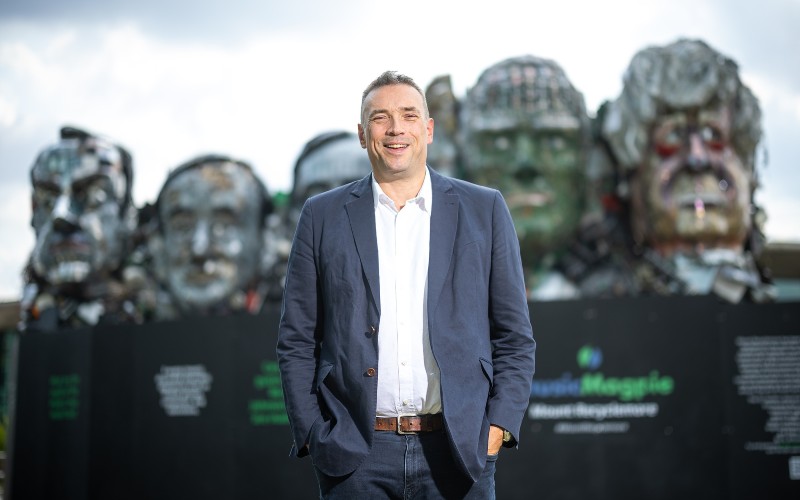
Named backers include Steve Oliver, co-founder of electronics resale business musicMagpie, and Vicky Soden, chief executive of Women in Banking and Finance. Oliver’s track record as a product entrepreneur and Soden’s profile in financial leadership were cited as strategic endorsements rather than institutional venture capital participation. The company’s chosen route to market — licensing to established manufacturers — is reflected in the investor mix, which is skewed to angels with commercial and sector connections rather than deep-pocketed industrial partners.
If you're researching potential backers in this space:
- Explore our list of greentech venture capital firms in the UK
- Browse our directory of greentech angel investors in the UK
Founder perspective
The company was founded by Charlotte Melia, Christie-Lee Molgaard, Professor Jason Hallett and Dr Juliana Cumming. Melia and Molgaard initially funded work at Imperial College after encountering balloon waste while running an international events studio. Dr Cumming, then a PhD student, subsequently identified a biodegradable elastomeric material that avoids traditional vulcanisation.
In the announcement, Charlotte Melia, Chief Executive at Bioloon, said:
Next steps will now be rapid. We’re moving from lab to factory with our focus this quarter on turning Bioloon into a format that runs on existing balloon production lines with no new infrastructure and at the same cost.
We’re also developing the colour range. Manufacturing trials are planned for January 2027 with leading global balloon makers in South America and Europe. We’re targeting shop shelves in spring 2028.
In the announcement, Charlotte Melia, Chief Executive at Bioloon, said:
The Balloon manufacturing pilots are just the start. The same chemistry can transform gloves, medical products like catheters and even condoms. We think this is one of the biggest untapped opportunities in green materials, and we’re building a British company to lead it.
Founders say they seeded the initial research themselves — putting in a final £30,000 during Covid — before securing the current round.
The bigger picture
Bioloon’s plan sits at the intersection of materials innovation and circular-economy pressure on single-use and short-life rubber products. If licensing to global manufacturers succeeds, the company could bridge a common gap for university spin-outs: moving from promising lab chemistry to mass production without building capital-intensive factories.
Regulatory approvals and large-scale biodegradation studies will be critical next steps. The pilot partnerships in Europe and South America signal a pragmatic route to market validation and supply-chain alignment, while the valuation and angel backing reflect early commercial confidence rather than deep industrial buy-in.
The deal is another example of UK greentech activity spinning out of universities and attracting angel capital to de-risk early manufacturing milestones. As Europe and regulators push for more sustainable materials, technologies that can slot into existing production lines — rather than replace them — are likely to gain investor and industrial interest.
They've invested in Bioloon
Get to know these greentech investors
| Angel Investors | Location | Connect | Investment Focus | Startup Investments |
|---|---|---|---|---|
 Steve Oliver co-founded musicMagpie. He invested in Appacut’s £600,000 seed roun... |  UK | |||
| All angel investors | All locations | All investor sectors | All funded startups |
*These angel investors have publicly mentioned their interest in angel investing or are members of angel networks. (Last updated: November 2026)
Click here for a full list of 7,589+ startup investors in the UK