Reading-based NewOrbit raises £13.9m led by Voyager Ventures with David Kirk

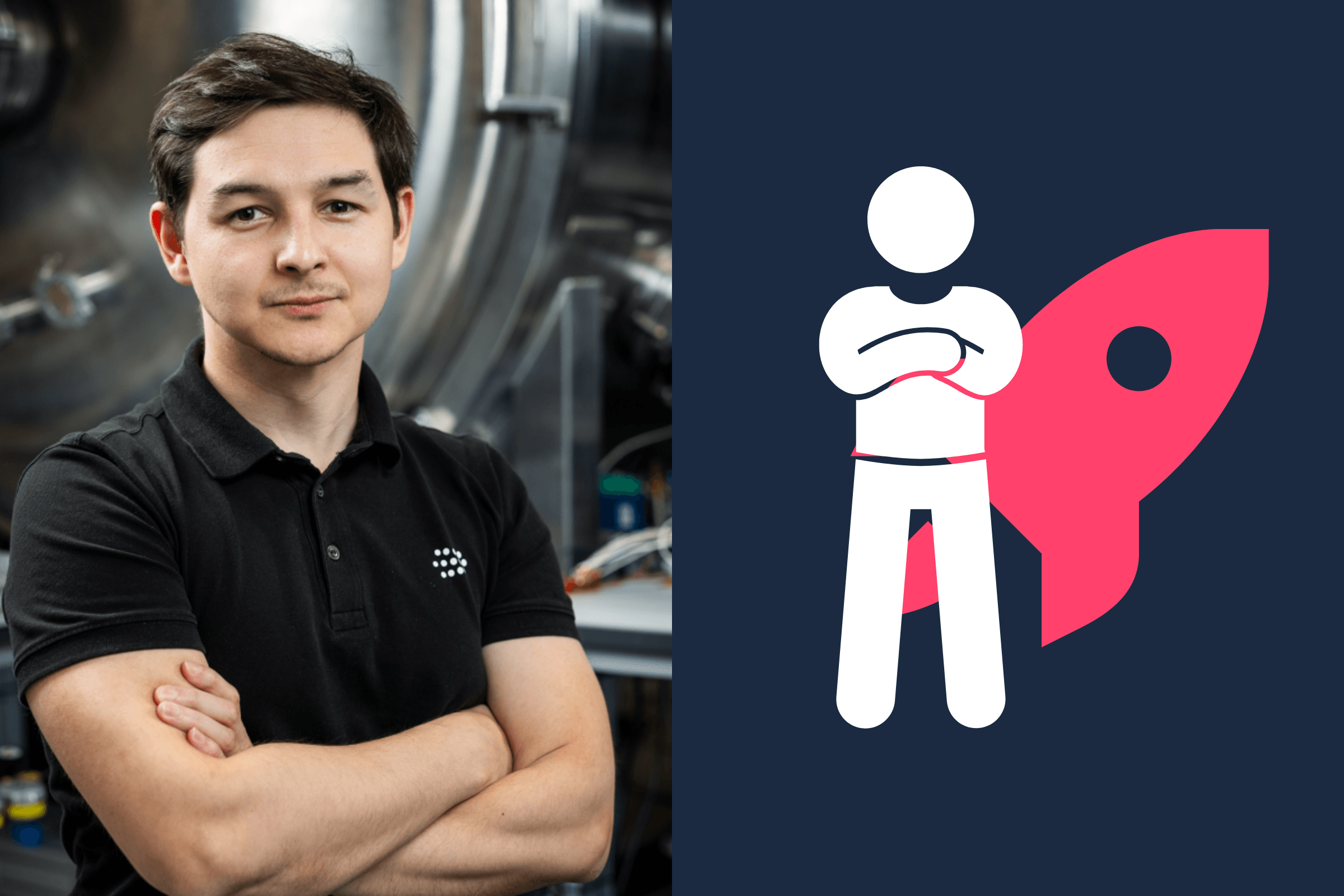
This article covers NewOrbit, a UK spacetech startup, which has raised £13.9m in a growth funding round to build satellites designed to operate in very low Earth orbit. The funding will pay for a production facility and the startup's first commercial satellite, intended to open a new operational orbital layer to deliver higher-resolution imagery, lower-latency communications and new sensing capabilities for customers such as agriculture, mapping, mobile connectivity and defence.
NewOrbit, a UK spacetech startup, has raised £13.9m in a growth funding round to build satellites designed to operate in very low Earth orbit (VLEO), between 200 and 300 kilometres. The funding will pay for a production facility and the company’s first commercial satellite, aiming to open a new operational layer of orbital infrastructure that could cut costs and enable capabilities not possible from higher orbits.
Why it matters
Very low Earth orbit has been largely unused by commercial satellites because of aerodynamic drag, atomic oxygen corrosion and destabilising torques. Operating closer to Earth matters because it can deliver materially higher-resolution imagery, lower latency communications and new sensing modes such as spaceborne LiDAR. Those capabilities matter for customers ranging from agriculture and mapping to mobile connectivity and defence.
NewOrbit’s pitch is that by solving the engineering challenges of VLEO it can offer drone-quality imagery at a fraction of current costs and deliver 5G-style connectivity to ordinary phones without specialised ground kit. If realised at scale, those are step changes rather than incremental improvements for downstream services.
Inside the product
NewOrbit says it has purpose-engineered a satellite, NEO-1, with an on-board propulsion system and materials choices intended to survive the VLEO environment for up to five years. The company highlights three technical barriers that must be overcome in VLEO: aerodynamic drag, atomic oxygen erosion and aerodynamic torques, and positions NEO-1 as addressing all three.
The funding will build the NEO Production Complex, due to open in 2027 in Reading in the UK’s Thames Valley. The plan is to integrate the first commercial satellite for launch in 2028 and then scale production from around ten satellites a year to several a week. At full pace NewOrbit expects the facility to be Europe’s largest dedicated VLEO production site and a component of continental sovereign space capability.
In the announcement, Anatolii Papulov, CEO and co‑founder at NewOrbit, said:
For sixty years, VLEO has been treated as too hostile for commercial satellites. It is in fact the most valuable empty real estate in space.
Who are the investors?
The round is led by Voyager Ventures and described by NewOrbit as oversubscribed. Named participants include angel backers David Kirk, former Chief Scientist at NVIDIA, and Lawrence Leuschner, co‑founder and former CEO of TIER Mobility, the family office Custos, and continued support from Atlantic.vc, Lifeline Ventures, LGF and Illusian.
David Kirk brings experience in advanced graphics and systems software that is relevant to on‑board processing and imaging. Lawrence Leuschner’s background in mobility speaks to commercialisation and scaling of vehicle fleets and services. The mix of venture capital, repeat backers and strategic angels signals both financial and domain interest in the technical approach.
The company says the round totals £13.9m.
If you're researching potential backers in this space:
- Explore our list of space venture capital firms in the UK
- Browse our directory of space angel investors in the UK
Founder perspective
NewOrbit has recruited high-profile advisers as it moves from prototype to production. Jean‑Jacques Dordain, Director General of the European Space Agency from 2003 to 2015, joins the advisory board, alongside Sir Chris Deverell, former Commander of UK Joint Forces, who was already on NewOrbit’s board.
In the announcement, Jean‑Jacques Dordain, Director General of the European Space Agency (2003-2015), said:
VLEO is one of the few genuinely new commercial categories remaining in space, and opening it requires a rare combination of engineering excellence and institutional discipline. NewOrbit has both, and the fact that this category is being defined from the UK is significant for European space.
In the announcement, Sir Chris Deverell, former Commander of UK Joint Forces, said:
I believe VLEO will become a critical layer of future space infrastructure, supporting both commercial and national security missions. I’m proud that this capability is being built in the UK, helping to establish Britain as a leader in next‑generation space technology.
The core team is based in Reading and includes engineers with prior roles at SpaceX, NASA JPL, Rocket Lab, Tesla, Airbus, ESA and Formula 1, which the company says supports its claims about systems engineering and manufacturing readiness.
The bigger picture
NewOrbit’s plan to industrialise VLEO activity ties into wider debates about European sovereign capacity in space and the commercialisation of new orbital layers. A production facility in the UK would complement existing manufacture and launch capabilities across Europe and reflect growing investor interest in companies addressing hard technical problems in space.
The outcome to watch is not only whether NEO‑1 meets its durability and performance targets in VLEO but whether a reliable production and launch cadence can be sustained. If it does, it could change the economics of Earth observation and low‑latency connectivity and influence how regulators and planners treat new orbital traffic and debris mitigation.
This raise adds to momentum around UK and European spacetech, where public and private actors are increasingly focused on manufacturing, sovereign services and new commercial niches in orbit.
They've invested in NewOrbit
Get to know these space investors
| Investors | Investment Focus | Startup Investments | Round Size | Connect |
|---|---|---|---|---|
 Voyager Ventures( ) San Francisco, US  | ||||
 Custos( ) Austin, US | ||||
 Atlantic.vc( ) | ||||
 Lifeline Ventures( ) Helsinki, Finland | ||||
 LGF( ) Dallas, US | ||||
 Illusian Family Office( ) Helsinki, Finland | ||||
| All investors | All investor sectors | All funded startups | All funding rounds |
| Angel Investors | Location | Connect | Investment Focus | Startup Investments |
|---|---|---|---|---|
 David Kirk | US | |||
 Lawrence Leuschner | Berlin | |||
| All angel investors | All locations | All investor sectors | All funded startups |
*These angel investors have publicly mentioned their interest in angel investing or are members of angel networks. (Last updated: September 2026)
Click here for a full list of 7,589+ startup investors in the UK