UK Startup Funding Report: £378.8m raised across Space, Cyber security and Fintech (10–14 Aug 2026).

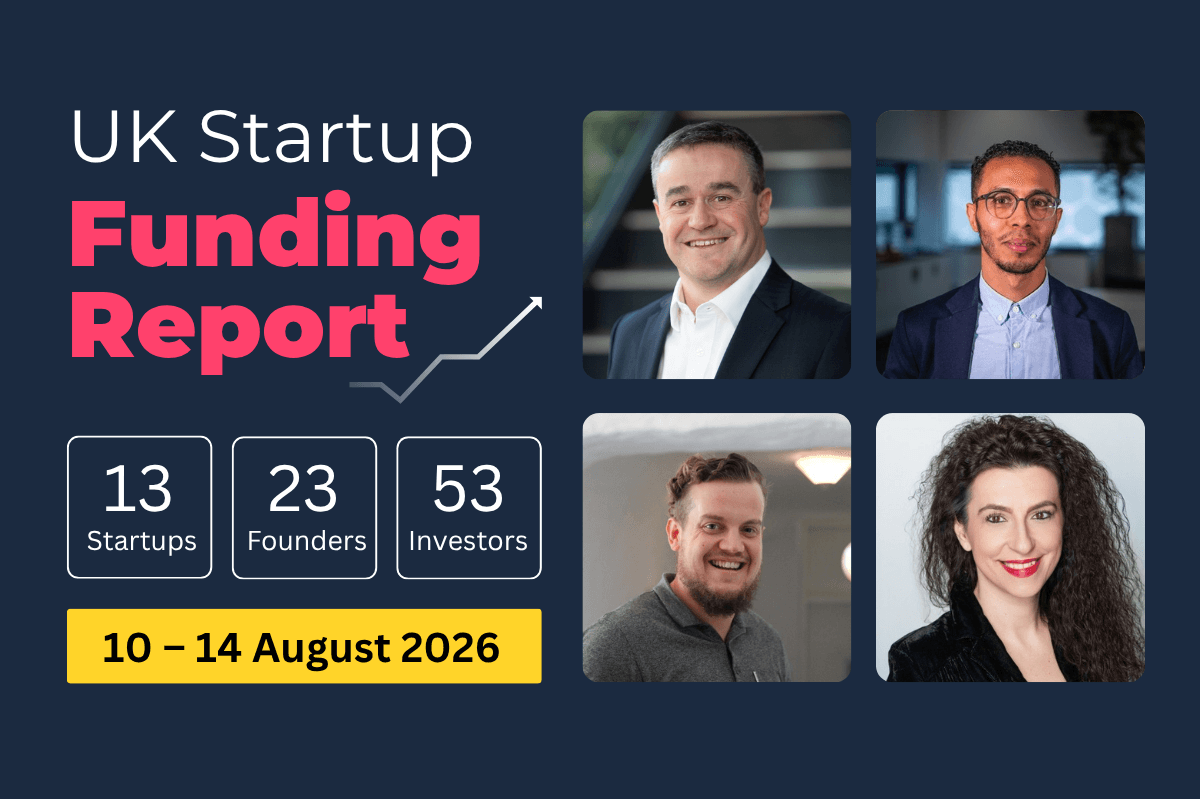
It's Friday, 14 August, and this is your UK Startup Funding Report.
This week saw major deals across space, cyber security and fintech that together pushed UK startup funding to £378.8M. A large defence-linked series C led the headlines while a string of enterprise and infrastructure rounds underlined investor interest across sectors.
AI security and edge orchestration attract capital
Startups building AI-enabled products and specialised security continue to attract funding as models move into production. This week’s deals underline demand for both infrastructure and safety tooling, and point to industrial AI use cases with decarbonisation potential. Investors are focusing on tools that secure increasingly complex AI attack surfaces while accelerating edge deployments.
Mindgard closed a £22.22 million Series A to scale an AI security platform that tests and protects models, agents and AI applications in production, with funds earmarked for product, engineering and sales capacity. Edgify raised £6.7 million to roll out an edge AI orchestration platform for physical retail, promising lower latency and local data processing in device-dense environments. MatAnalytics secured a £619,000 Innovate UK grant to develop CITRUS, a physics-informed AI tool that compresses thermomechanical and microstructure predictions for steelmaking from hours to seconds, supporting validation aimed at reducing energy use in reheating furnaces. Cytix raised £5 million in a Series A to expand a change-risk platform that monitors and validates the security impact of software changes as AI-assisted development speeds release velocity.
Taken together, the rounds show appetite for production-grade security and edge orchestration and highlight a mix of VC and grant routes into applied AI. While lead investors have not been disclosed for all rounds, the pattern suggests backers are prioritising infrastructure and safety tooling as models reach commercial scale.
This week's AI & Cybersecurity deals:
Mindgard closed a £22.22m series A to scale its AI security platform that tests and protects models, agents and AI applications in production. The Lancaster University spinout will use the capital to grow product, engineering and sales capacity as enterprises seek specialised tooling for emerging AI attack surfaces.
Edgify raised £6.7m to accelerate roll‑out of its edge AI orchestration platform for physical retail, promising lower latency, local data processing and reduced infrastructure costs. The funding will support commercial deployments and broaden use cases across grocery and other device‑dense environments.
MatAnalytics received a £619,000 Innovate UK grant to develop CITRUS, a physics‑informed AI tool that speeds thermomechanical and microstructure predictions for steelmaking from hours to seconds. The funding will support industrial validation and work to reduce energy use in reheating furnaces.
Manchester‑based Cytix raised £5.00m in a series A led by Northern Gritstone to expand its change risk platform, which monitors and validates the security risk of software changes. The funding will accelerate deployment as organisations contend with faster, AI‑assisted development cycles and the need for auditable risk workflows.
Aerospace and mobility: funding for certification and scale
Capital continues to flow to hardware-heavy aerospace and connected mobility projects as firms push towards certification and wider commercial roll-out. This week’s funding highlights the mix of VC, grants and government contracts that underpin scale in defence, eVTOLs and autonomous ground vehicles, with the market responding to regulatory steps and rising demand for air-defence and autonomous operational tools.
Cambridge Aerospace closed a £222.45 million Series C at roughly a £2.5 billion valuation to scale manufacturing and accelerate product development for interceptor systems, following UK Ministry of Defence contracts. Vertical Aerospace raised about £74.04 million in a growth package — combining convertible notes, an underwritten equity offering and preferred equity — to fund certification and commercialisation of its Valo eVTOL, with proceeds allocated to design reviews, battery production expansion and hybrid-electric flight testing. Aurrigo won a £1.43 million grant to trial autonomous Auto-Shuttle vehicles for airside patrols, inspections and bird monitoring as part of the SENTRY trials.
Collectively, these deals show government support and private capital working in parallel to derisk hardware scale-up and certification. Investors and public agencies appear to be backing projects that can meet defence obligations while progressing toward commercial certification.
This week's Aerospace & Mobility deals:
Cambridge Aerospace closed a £222.45m series C at roughly a £2.5bn valuation to scale manufacturing and accelerate product development for its interceptor systems. The raise follows UK Ministry of Defence contracts and is aimed at meeting rising demand for counter-drone and air-defence capabilities in allied markets.
Vertical Aerospace raised approximately £74.04m in a growth package combining convertible notes, an underwritten equity offering and preferred equity to fund certification and commercialisation of its Valo eVTOL. The capital is earmarked for design reviews, battery production expansion and hybrid-electric flight testing ahead of certification.
Aurrigo won a £1.43m grant from the CAM Pathfinder programme and Innovate UK to trial autonomous Auto‑Shuttle® vehicles for airside patrols, inspections and bird monitoring. The SENTRY trials will test whether small autonomous vehicles can reduce risk and routine workload at airports.
Clinical-stage biotechs target first-in-human trials
Clinical-stage biotech continues to attract focused capital as companies move programmes from preclinical development to first-in-human studies. This week’s activity underlines investor interest in genetically defined and high-unmet-need diseases where clinical proof points are essential.
Glasgow-based Mironid raised £34.11 million in a Series B to take its lead small-molecule ADPKD candidate into clinical development. The funding is intended to finance early human studies as the company seeks to validate its LoAc approach to slowing cyst growth in autosomal dominant polycystic kidney disease.
The round highlights a continued flow of capital into targeted, clinical-stage programmes rather than broad platform plays. Lead investors have not been disclosed, but the deal illustrates how concentrated funding can accelerate a move from lab to clinic.
This week's Healthtech / Biotech deals:
Glasgow‑based Mironid raised £34.11m in a series B to take its lead small‑molecule ADPKD candidate into clinical development. The funding will finance early human studies aimed at validating the company’s LoAc approach to slowing cyst growth in autosomal dominant polycystic kidney disease.
Grants steer early commercialisation of circular and battery materials
Companies working on resource recovery, domestic battery materials and wastewater circularity are winning government grants and early-stage backing. This week’s funding highlights efforts to localise critical supply chains and cut embodied emissions in industrial processes, with an emphasis on piloting technologies that can be scaled within UK infrastructure.
Watercycle secured a £3 million government grant from the DRIVE35 Scale Up Fund and Innovate UK to demonstrate domestic production of battery-grade lithium from waste streams through the ReLiVE project. The pilot will test direct lithium extraction technology and assess environmental and economic outcomes. Metal Morph raised £700,000 in a pre-seed round to scale resource recovery technology for water and wastewater and to fund industry pilots with UK utilities, targeting the recovery and reuse of aluminium- and iron-based treatment chemicals.
Taken together, these awards and pre-seed rounds show public money steering early commercialisation towards strategic materials and circular solutions. The UK grant landscape remains central to proving industrial processes ahead of larger private capital rounds.
This week's Greentech & Circular Economy deals:
Watercycle secured a £3.00m government grant from the DRIVE35 Scale Up Fund and Innovate UK to demonstrate domestic production of battery‑grade lithium from waste streams. The ReLiVE project will pilot direct lithium extraction technology and assess environmental and economic outcomes for UK battery supply chains.
Metal Morph raised £700,000 in a pre‑seed round to scale its resource recovery technology for water and wastewater and fund industry pilots with UK utilities. The company aims to recover and reuse aluminium‑ and iron‑based treatment chemicals, reducing costs and embodied emissions for water treatment.
Strategic and non-dilutive finance for payments and services
Payments and platform-enabled business services continue to expand through strategic, non-dilutive and early-stage financings. This week’s activity favours partnership-led expansion and capital structures that preserve ownership while funding growth, reflecting pragmatic approaches to scaling commercial footprints and workforce infrastructure.
Tap & Go accepted a minority strategic investment from Cashflows intended to deepen a commercial partnership and expand the payments provider’s product set into ecommerce and virtual payments; the amount was not disclosed. M&A adviser LAVA secured £8 million in debt financing from Beechbrook Capital to fund international expansion and operational upgrades while preserving employee ownership via an employee ownership trust. FlairMakers raised £500,000 in a pre-seed round led by SFC Capital to build venue partnerships and develop a platform for vetted freelance hospitality professionals, standardising training, compliance, contracting and payments to help venues hire at scale.
Overall, the mix of non-dilutive debt, strategic minority stakes and targeted pre-seed equity supports growth without wholesale ownership changes. The pattern suggests investors and acquirers are backing commercial traction and partnership models over risky, high-burn expansion.
This week's Fintech & Business Services deals:
Cashflows took a minority stake in Tap & Go in a strategic growth investment aimed at deepening a commercial partnership and expanding the payments provider’s product set into ecommerce and virtual payments. The amount was not disclosed; the deal is intended to combine settlement infrastructure with Tap & Go’s merchant relationships.
M&A adviser LAVA secured £8.00m in debt financing from Beechbrook Capital to fund international expansion and operational upgrades while preserving employee ownership through an EOT. The non-dilutive package lets the firm scale without selling equity or changing its ownership structure.
FlairMakers raised £500,000 in a pre‑seed round led by SFC Capital to build venue partnerships and develop its platform for vetted freelance hospitality professionals. The product standardises training, compliance, contracting and payments to help venues hire freelancers at scale.
🎧 That's this week's Startupmag Weekly Briefing.
See you next Friday for another look at the UK startup scene.