UK Startup Funding Report: £605.0m raised across Biotech, AI and Supply Chain (22–26 Jun 2026).

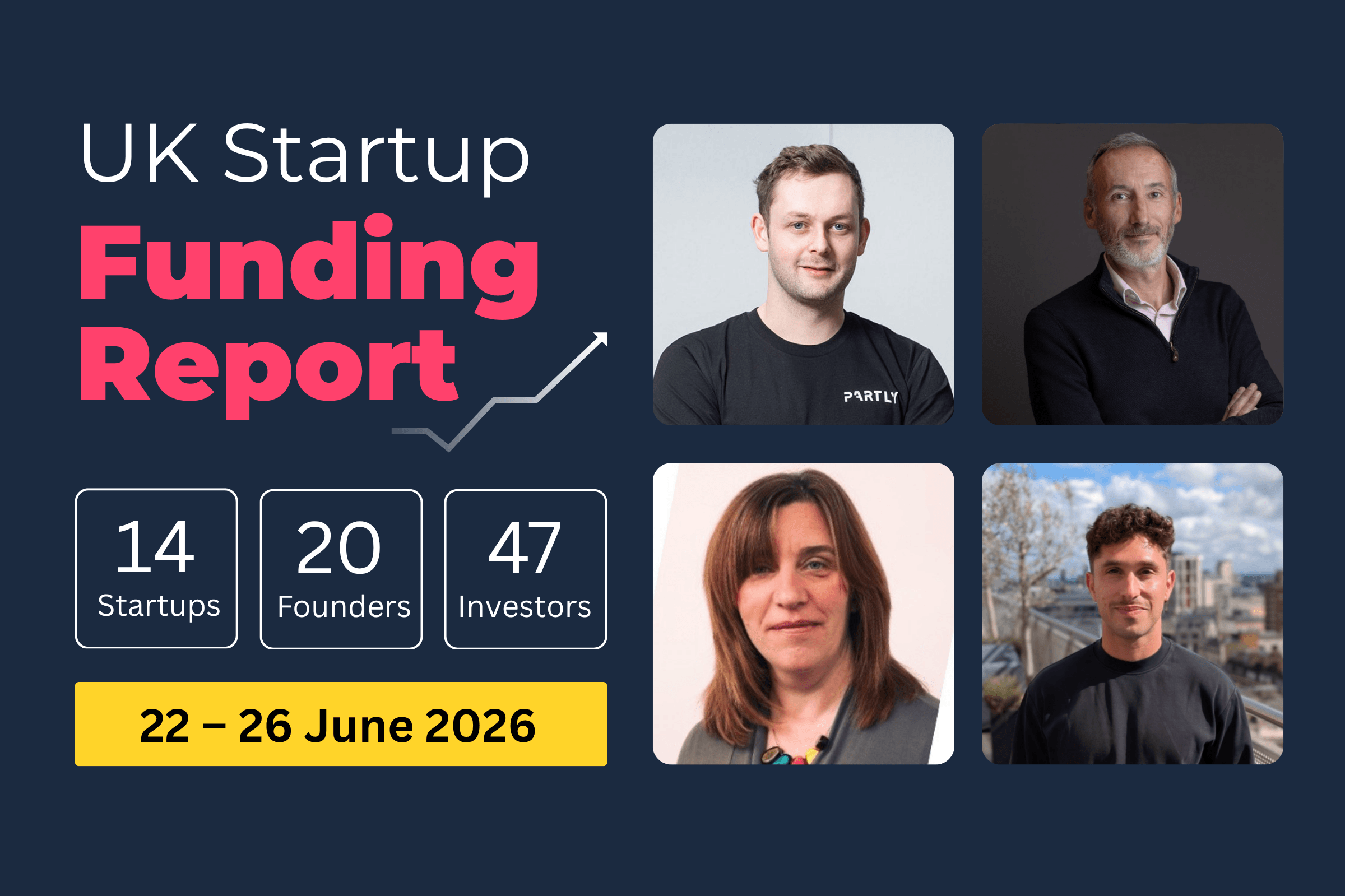
It's Friday, 26 June, and this is your UK Startup Funding Report.
A busy week for UK startups saw large growth rounds across biotech, AI and supply chain verticals, while smaller raises supported hardware and SaaS plays. Together the announced financings totalled £605.0M for 22–26 Jun 2026.
AI investment pivots toward industrial and open models
This week saw both private capital and public funding flow towards companies building foundation and applied AI, alongside grants for open AI research. Investors showed a clear preference for vertical, industrial applications that map to supply chains and certification needs, while public funders targeted work that reduces dependency on a small number of vendors. The combined pressure from markets and policy is steering advanced AI toward practical, revenue‑generating deployments.
Several sizable rounds illustrated that shift. Cambridge‑based CuspAI closed a £302.78 million growth round to accelerate materials discovery with generative AI and push industrial partnerships and manufacturable outputs. SOFAIR and a companion lab secured up to £60 million from UKRI/EPSRC to develop cheaper, more dependable open models and new learning paradigms aimed at easier adoption across public services and industry. Canterbury’s Partly raised £40 million to scale an automotive parts foundation model and open US operations from Austin, while London’s Isometric took a £30 million Series A to expand an AI platform that automates industrial certification and verification, including algorithmic checks for carbon removal projects.
Taken together, the transactions underline investor appetite for AI that directly addresses materials, supply chains and certification challenges. The public grants signal a parallel policy push to create open, lower‑cost alternatives and reduce vendor concentration as AI moves from research to routine commercial use.
This week's AI deals:
Cambridge-based CuspAI closed a large growth round of £302.8m that reportedly includes high-profile backers. The company uses generative AI for materials discovery and says the funds will accelerate industrial partnerships and manufacturable outputs.
SOFAIR and a companion lab won up to £60m of UKRI/EPSRC funding to develop cheaper, more dependable open AI models and new learning paradigms. The programme will back university-led research intended to make advanced AI easier to run and adopt across public services and industry.
Partly raised £40m in a Series B led by DST Global Partners to scale its automotive parts foundation model and launch US operations from Austin. The funding will support commercial roll-out and partnerships with insurers, repairers and manufacturers.
Isometric closed a £30m Series A to scale its AI platform that automates industrial certification and verification. The capital will expand the Certify product across industrial markets and deepen its algorithmic verification capabilities for projects such as carbon removal.
Biotech & Healthtech: funding to push candidates toward clinic
Funding continues to support therapeutics, diagnostics and life‑science platforms, with investors backing advanced biologics, protein degraders and gene‑therapy enabling technologies. That mix of capital is important because it underwrites IND‑enabling work and the first‑in‑human studies that translate lab science into patient benefit.
London’s RQ Bio raised £87.09 million in a Series A to advance RQB01, a long‑acting antibody intended to provide season‑long influenza protection for high‑risk patients; the financing will support IND‑enabling studies and first‑in‑human trials. Cambridge‑based TRIMTECH Therapeutics closed an £11 million seed extension to progress small‑molecule degrader programmes targeting toxic protein aggregates and to broaden its degrader platform toward neurodegenerative targets. Houdini Bio took a £1.5 million pre‑seed to commercialise a machine‑learning guided DNA design platform aimed at reducing gene therapy silencing, while Surrey spin‑out Silveray raised £5 million to scale production of a flexible digital X‑ray film and accelerate clinical adoption in areas such as breast screening and radiotherapy monitoring.
The range of round sizes — from a large Series A to smaller seed and pre‑seed cheques — reflects both high conviction in later‑stage therapeutic assets and continued investor support for platform plays and university spin‑outs moving toward regulatory milestones.
This week's Biotech & Healthtech deals:
London’s RQ Bio raised £87.1m in a Series A to advance RQB01, a long-acting antibody designed to give season-long protection against influenza for high-risk patients. The financing will fund IND‑enabling work and push the candidate towards first-in-human studies.
TRIMTECH closed an £11m extension to its seed round to push forward small‑molecule degrader programmes targeting toxic protein aggregates. The money will help expand its degrader platform with the aim of addressing neurodegenerative diseases.
Houdini Bio closed a £1.5m pre‑seed to commercialise a machine‑learning guided DNA design platform that aims to reduce gene therapy silencing. The funds will support team growth and early partnership work translating sequence‑level engineering into therapeutic programmes.
Surrey spin‑out Silveray raised £5m to scale production of its flexible Digital X‑ray Film and accelerate clinical adoption. The capital will expand manufacturing and support regulatory work for healthcare applications such as breast screening and radiotherapy monitoring.
Deeptech backs hardware for supply chains and decarbonisation
Hardware and sustainability‑focused deeptech drew attention this week as investors funded near‑term commercial applications of advanced physical sciences. Startups addressing radionuclide supply, lab plastics recycling and industrial decarbonisation secured capital to scale pilot and production work, aiming to replace fragile supply chains and cut emissions through engineering rather than incremental software improvements.
Astral Systems raised £23 million in a first close to scale modular fusion reactors for medical radioisotope production, with funds earmarked to accelerate reactor scale‑up at a UK facility and bring isotope supply online for emerging cancer treatments. LabCycle secured £180,000 from the British Design Fund alongside an Innovate UK grant to develop AutoDecon, a system for recycling contaminated lab plastics and to run pilots with NHS and research customers. In both cases, the combination of private capital and public grants helped move projects from prototype toward early deployment and regulatory steps.
The pattern shows investor willingness to support capital‑intensive hardware when there is a clear commercial route and visible public backing for demonstration projects.
This week's Greentech & Deeptech deals:
Astral Systems raised £23m in a first close to scale its modular fusion reactors for medical radioisotope production. The funds will accelerate reactor scale-up at a UK facility and aim to bring isotope supply online for emerging cancer treatments.
LabCycle raised £180k from the British Design Fund, alongside an Innovate UK grant, to develop AutoDecon, a system for recycling contaminated lab plastics. The funding will support pilots and early deployment with NHS and research customers.
Mobility: specialised EVs target middle‑mile fleets
Investors are focusing on electrification and purpose‑built vehicle platforms aimed at middle‑mile and commercial logistics. The emphasis is on focused EV architectures and localised manufacturing that can lower total cost of ownership and emissions for under‑served fleet segments, offering scalable alternatives to diesel vehicles.
Superlight raised £16 million in an oversubscribed Series A to complete a UK manufacturing facility and prepare customer testing for its OV‑1 electric middle‑mile truck. The funding is intended to support initial sales in the UK and EU and a planned entry into the US market. While the company’s staging for US expansion remains unclear, the round underscores investor appetite for specialised commercial EV platforms and the importance of factory readiness and customer testing ahead of wider fleet roll‑out.
Expect further capital to follow companies that can demonstrate local production, tested hardware and clear total‑cost benefits for fleet operators.
This week's Mobility deals:
Superlight raised £16m in an oversubscribed Series A to complete a UK manufacturing facility and prepare customer testing for its OV‑1 electric middle‑mile truck. The funding supports initial sales in the UK and EU and a planned US market entry.
SaaS, fintech and consumer: blended finance to scale revenue
This week’s deals highlighted digital platforms for SMEs, asset finance, workforce management and consumer foodtech, and a pattern of combining debt facilities with equity to scale originations while preserving capital efficiency. Such financing structures let startups grow revenue and manage underwriting risk as they scale.
London’s Equipal closed a growth package of about £16 million from Altum Capital Management, comprising a £1.25 million equity investment and a £15 million forward flow facility to provide asset finance on purchases up to £250,000, including commercial vehicles. Birmingham’s HR Duo raised £1.4 million in a seed round led by Puma Growth Partners to hire UK sales staff and strengthen its workforce‑management SaaS for frontline‑heavy SMEs. Omni Pet secured £11 million to accelerate online customer growth, expand into retail and launch veterinary‑grade products, including a drug‑free weight‑loss supplement for dogs, supporting product development and wider distribution of its subscription nutrition service.
Taken together, the rounds underline investor interest in revenue‑generating SaaS and fintech models alongside consumer brands that combine subscription economics with product‑led differentiation.
This week's SaaS, Fintech & Consumer deals:
Fintech Equipal closed about £16m from Altum Capital Management, combining a £1.25m equity injection with a £15m forward flow facility to scale asset finance for SMEs. The deal expands the firm’s capacity to underwrite higher-value vehicle and equipment loans.
HR Duo raised £1.4m in a seed round led by Puma Growth Partners to hire UK sales staff and strengthen its workforce‑management SaaS. The startup targets frontline‑heavy SMEs with rostering, attendance and compliance tools.
Omni Pet raised £11m to accelerate online customer growth, expand into retail and launch new veterinary-grade products, including a drug-free weight‑loss supplement for dogs. The funding will support product development and wider distribution of its subscription nutrition service.
🎧 That's this week's Startupmag Weekly Briefing.
See you next Friday for another look at the UK startup scene.