UK Startup Funding Report: £1248.2m raised across AI, Biotech and Healthtech (6–10 Jul 2026).

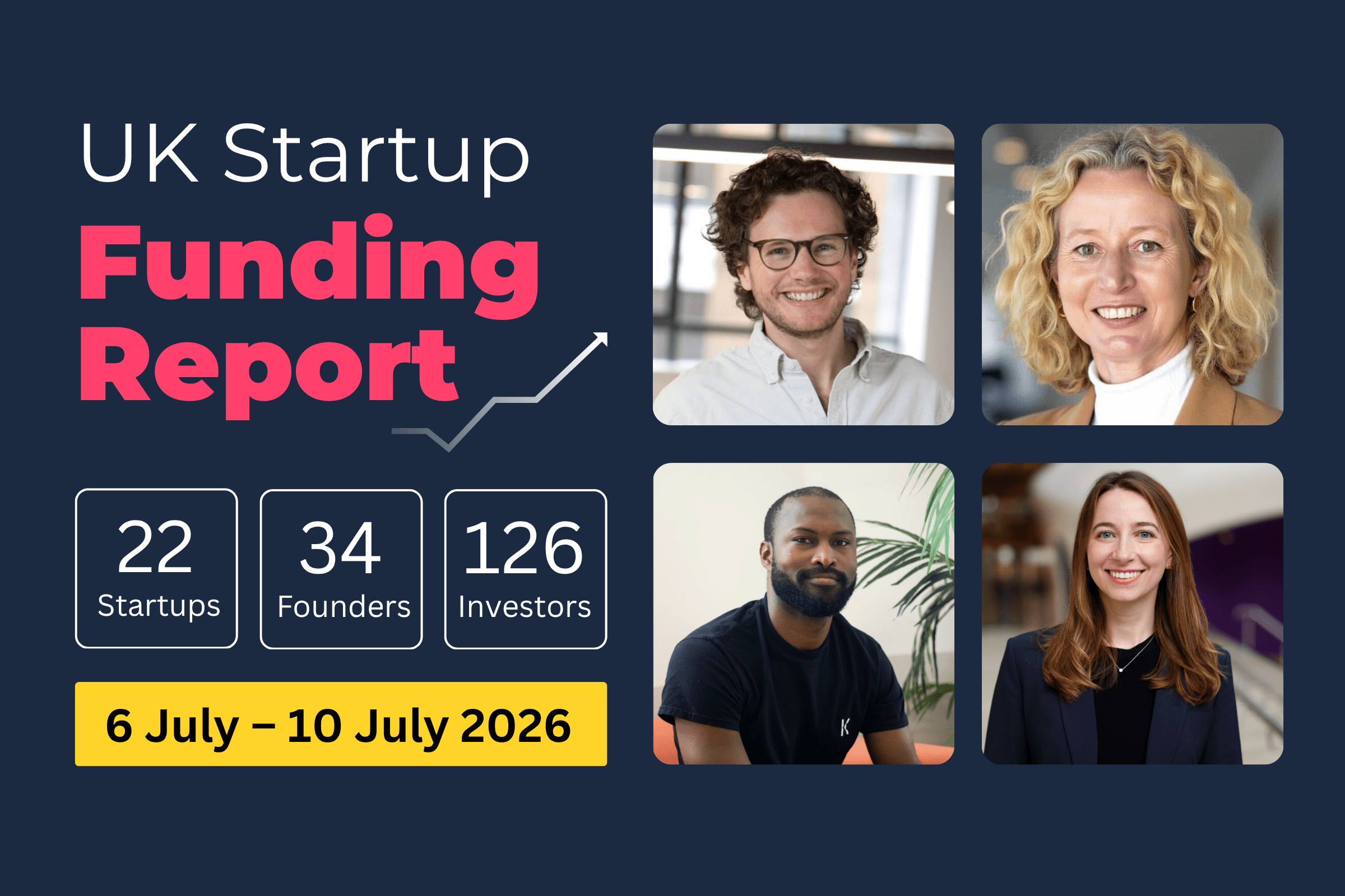
It's Friday, 10 July, and this is your UK Startup Funding Report.
UK startups raised £1248.2M across the week, led by large AI, biotech and healthtech financings. Deals ranged from multi‑hundred‑million debt and growth facilities to seed and pre‑seed rounds backing hardware and clinical innovations.
AI: infrastructure meets applied tooling
Platform and applied AI plays dominated headlines this week as investors backed both heavy infrastructure and vertical applications. Funding ranged from large debt facilities for data-centre expansion to seed rounds for creative and robotics training datasets, underlining continued appetite across the stack. That mix matters because capital is flowing to foundational capacity as well as the services built on top of it.
Nscale closed a £673.45 million revolving credit facility to accelerate an AI data-centre build-out across the US, Europe and APAC, giving the vertically integrated infrastructure provider flexible capital for model training and inference. Fleek raised £19 million to grow an AI engine and marketplace for the secondhand clothing trade, scaling inventory processing with vision-language models. Marker secured £10 million in a seed round led by Index Ventures to build an AI-native word processor to augment writers through ideation, drafting and revision. World Model Data took £7 million to assemble game-derived datasets for training world models, using the funds to secure licensing deals and grow curated training data.
Taken together, the rounds reveal a two-track pattern: large, capital-intensive plays that support model training and inference alongside smaller bets on applied tooling and specialised datasets. It remains to be seen how firms will sequence product rollouts, but the activity shows investors are funding both the heavy lifting and the creative ends of the AI ecosystem.
This week's AI & Machine Learning deals:
Nscale closed a £673.5m revolving credit facility led by major global banks to speed its AI data‑centre build‑out across the US, Europe and APAC. The debt line gives the vertically integrated infrastructure provider flexible capital to expand capacity for training and inference without immediate equity dilution.
Fleek raised £19m to grow its AI engine and marketplace infrastructure for the global secondhand clothing trade. The funding will scale inventory processing and expand supply, using vision‑language models to automate grading and pricing across new markets.
Marker raised £10m in a seed round led by Index Ventures to build an AI‑native word processor that helps writers with ideation, drafting and revision. The product aims to augment creative workflows rather than produce finished copy for users.
World Model Data raised £7m to assemble game‑derived datasets for training ‘world models’ used in robotics and physical AI. The company will use the cash to secure licensing deals with game developers and scale its curated training data.
Healthtech and biotech: funding from discovery to clinic
Therapeutics, diagnostics and medtech continued to attract capital this week, with investors backing both clinical development and platform scale. Rounds ranged from large growth financings to pre-seed checks, reflecting a pipeline that stretches from manufacturing and clinical rollout to very early discovery work. That breadth helps keep the translational pipeline funded from idea to clinic.
Leo Cancer Care raised £48.59 million to scale its upright imaging and radiotherapy platform, funds earmarked to accelerate manufacturing and clinical rollout and to reduce treatment-room footprints. Alchemab Therapeutics took a £25 million extension from British Business Bank to expand its antibody dataset and speed clinical development via the Resiliome dataset. Healome Therapeutics closed a £2 million seed round to advance an extended-residence eye-drop matrix, supporting preclinical work, GMP scale-up and regulatory engagement ahead of first-in-human studies. Respiro Diagnostics raised £1 million in pre-seed funding to develop a breath-based liquid biopsy for earlier, non-invasive detection of lung cancer and other respiratory disease.
The pattern shows investors are still willing to fund capital-intensive clinical efforts alongside early-stage platform science. Timelines to human trials remain uncertain, but the funding pushes several programmes closer to pivotal clinical work.
This week's Healthtech & Biotech deals:
Leo Cancer Care raised £48.6m to scale its upright imaging and radiotherapy platform that shrinks proton and photon treatment room footprints. The funding will accelerate manufacturing and clinical rollout aimed at making advanced radiotherapy more deployable and cost‑effective.
Alchemab received a £25m extension from British Business Bank to expand its antibody dataset and accelerate clinical development of antibody therapeutics. The tranche increases its Series A and supports growth of the Resiliome dataset to improve discovery of rare, protective antibodies.
Healome closed a £2m seed round to advance an extended‑residence eye‑drop matrix that aims to improve drug retention on the ocular surface. The funds will finance preclinical work, GMP scale‑up and regulatory engagement ahead of first‑in‑human studies in 2027.
Respiro raised £1m in pre‑seed funding to develop a breath‑based liquid biopsy for earlier, non‑invasive detection of lung cancer and other respiratory diseases. The money will support clinical studies and device and lab workflow development ahead of planned trials.
Greentech and energy: flexibility and manufacturability in focus
Startups tackling the energy transition secured diverse capital this week, from virtual power platforms to new battery chemistries and industrial process improvements. Investors appear focused on load flexibility and manufacturability as markets seek to decarbonise without sacrificing reliability. The deals point to a clear interest in technologies that either balance the grid or remove production bottlenecks.
Axle Energy raised £18.69 million to scale a virtual power plant that aggregates EV chargers, batteries and heat pumps for grid-balancing, with capital intended to deepen utility integrations and expand commercial deployments. TaiSan secured £4.65 million to commercialise a sodium-ion battery with a proprietary solid-state electrolyte, funding pilot tests with manufacturers and R&D expansion. Gyre Energy raised just over £1 million to deploy an AI-driven optimisation and thermal storage platform for cold-chain facilities, targeting energy reductions and demand shifting. Pixel Flo took £5.3 million to industrialise a continuous-flow mass transfer system for microLED manufacturing and move the technology from lab demonstration to commercial coating equipment.
What stands out is the split between software-enabled flexibility plays and hardware innovations that target manufacturing or battery performance. Investors appear to favour projects that offer measurable energy savings or clearer paths to commercial deployment.
This week's Greentech & Energy deals:
Axle Energy raised £18.7m to scale its virtual power plant platform that aggregates EV chargers, batteries and heat pumps for grid balancing. The capital will be used to deepen utility integrations and expand commercial deployments as markets seek flexible, low‑cost balancing services.
TaiSan raised £4.65m to commercialise a sodium‑ion battery with a proprietary solid‑state electrolyte for mobile applications. The capital will fund pilot tests with manufacturers and expansion of Cambridge R&D facilities to validate performance and manufacturability.
Gyre Energy raised just over £1m to deploy its AI‑driven optimisation and thermal storage platform for cold‑chain facilities. The funds will support an enterprise‑scale installation aimed at cutting energy use and shifting demand away from peak price periods.
Pixel‑Flo raised £5.3m to industrialise a continuous‑flow mass transfer system for microLED manufacturing. The funding will move the technology from lab demonstrations to commercial coating equipment to tackle a key production bottleneck.
Robotics and defence: moving from prototype to production
Embodied AI and hardware-heavy startups had a strong week, with funding aimed at scaling production and retrofitting autonomy to existing fleets. Deals ranged from agricultural robotics to uncrewed naval platforms, signalling commercialisation and defence procurement as near-term priorities. The combination highlights investor interest in automation that can operate at scale.
HIVE raised £11.22 million in seed funding to develop a silicon brain that retrofits sensors and software onto industrial machines, accelerating deployments that upgrade existing fleets. Dogtooth Technologies took £14 million from a mix of investors and grants to commercialise autonomous harvesting robots for horticulture, funding broader deployments and improved perception and manipulation systems. Kraken Technology Group secured £130 million in a Series B led by DTCP and Rheinmetall to scale production of uncrewed surface and subsurface vessels, with capital earmarked for platform development and localised manufacturing as it moves toward higher-volume deliveries.
The trend is clear: investors are backing companies that can translate prototypes into repeatable production. Regional defence spending and commercial labour shortages both appear to be influencing where larger bets are placed.
This week's Robotics, Defence & Industrial Automation deals:
HIVE raised £11.2m in seed funding to develop a ‘silicon brain’ that retrofits sensors and software onto industrial machines to enable perception and autonomy. The funds will accelerate platform development and expand commercial deployments that retrofit existing fleets rather than replace them.
Dogtooth raised £14m from a mix of investors and grants to commercialise its autonomous harvesting robots for horticulture. The capital will fund broader deployments and further development of perception and manipulation systems to tackle labour shortages on farms.
Kraken raised £130m in a series B led by DTCP and Rheinmetall to scale production of uncrewed surface and subsurface vessels for allied naval forces. The capital will support platform development and localised manufacturing as the company moves from prototypes to higher‑volume deliveries.
Infrastructure, supply chain and fintech: efficiency and scale
Operational infrastructure and commerce-focused startups drew sizeable backing as investors targeted efficiency gaps across logistics and financial rails. Funding ranged from large buyout-style checks to seed rounds aimed at automation and merchant services, signalling appetite for businesses that reduce friction in supply chains and payments. That mix matters because it supports faster delivery, lower cost and improved working capital for merchants.
OryxAlign secured £254 million from Palatine Private Equity to fund organic growth, systems investment and targeted acquisitions in critical infrastructure and data-centre markets, supporting end-to-end network design and delivery. Gonini raised £3.3 million to expand its fulfilment operating system and grow a global fulfilment network for direct-to-consumer brands. Nexcade took £4.5 million to develop AI agents that automate freight-forwarding workflows such as quoting, booking and tendering as it rolls agents into customer operations across Europe and the US. Stoa raised £1.8 million to scale a cash-management platform that converts idle deposits into upfront perks for savers and business customers while preparing for US expansion.
Overall, the activity points to investor faith in technology that removes operational friction and unlocks scale for merchants. It is not yet clear how rapidly these platforms will capture market share, but the capital will let them press deployments and deepen partner integrations.
This week's Infrastructure, Supply Chain & Fintech deals:
OryxAlign secured £254m from Palatine Private Equity to fund organic growth, systems investment and targeted acquisitions in critical infrastructure and data‑centre markets. The backing will help the managed‑services firm scale its end‑to‑end network design and delivery for clients where uptime is essential.
Gonini raised £3.3m to expand its fulfilment operating system and grow a global fulfilment network for direct‑to‑consumer brands. The capital will be used to increase operational reach, deepen software capabilities and support merchant onboarding in new markets.
Nexcade raised £4.5m to develop AI agents that automate freight forwarding workflows such as quoting, booking and tendering. The funding will support product expansion and hiring as the company rolls agents into customer operations across Europe and the US.
Stoa raised £1.8m to scale a cash management platform that converts idle deposits into upfront perks for savers and business customers. The funding will support UK growth and preparations for US expansion while deepening bank and merchant partnerships.
🎧 That's this week's Startupmag Weekly Briefing.
See you next Friday for another look at the UK startup scene.